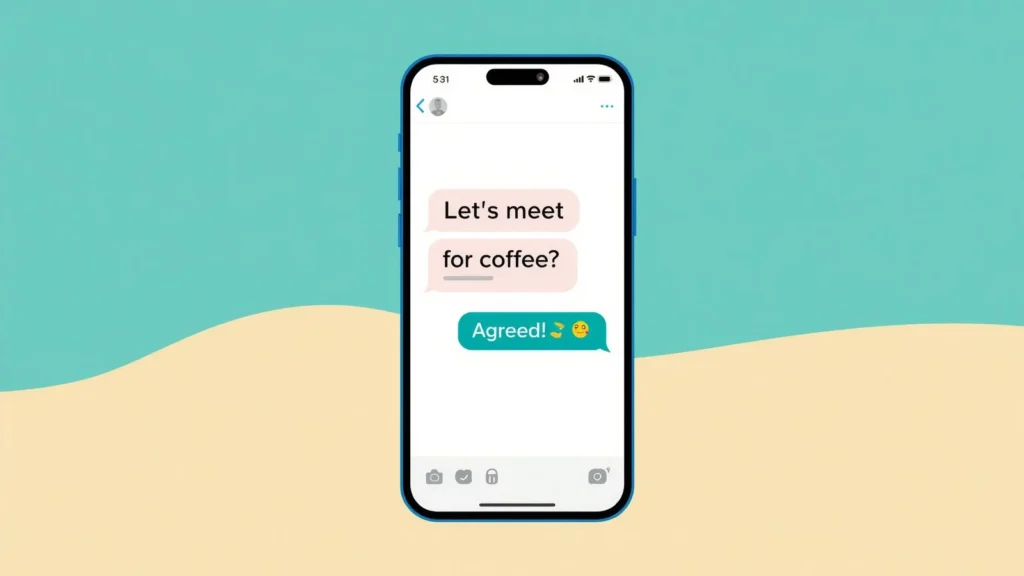

Definition:
“Agreed” in text messages or online chats is commonly used to indicate agreement, confirmation, or alignment with someone’s opinion, suggestion, or statement. It conveys a positive acknowledgment, often replacing phrases like ‘I agree’ or ‘That makes sense.’ ✅
When someone uses the word “agreed” in text, it usually signals consent, acceptance, or alignment with what was said. It’s a simple yet powerful way to confirm understanding in digital conversations. In messaging, chats, or emails, saying “agreed” clearly communicates that you share the same opinion or decision.
Understanding the use of “agreed” is crucial for effective communication, especially in professional or collaborative settings. It helps prevent misunderstandings and shows responsibility and clarity in responses. Using it appropriately can also enhance trust and streamline decision-making in both personal and workplace interactions.
Origin of “Agreed” in Text
The word “agreed” originates from the Old French word agreer, meaning to please or satisfy, and later from Latin adgrātāre, meaning to favor or consent. Historically, it was used in formal agreements and contracts to indicate consent or acceptance.
With the rise of digital communication, “agreed” became a concise and widely understood response in informal contexts like texting, chats, and social media posts. Its popularity grew because it is:
- Short and easy to type
- Polite without being verbose
- Universally understood across English-speaking regions
Platforms like WhatsApp, Messenger, Slack, and Discord contributed to its widespread adoption in everyday communication.
Usage of “Agreed” in Text
“Agreed” is versatile and can appear in different tones depending on the context:
1. Friendly or Casual Tone
Used among friends or peers to show agreement without extra commentary:
- Example:
Friend 1: “Let’s grab pizza tonight 🍕”
Friend 2: “Agreed!”
This tone conveys enthusiasm and mutual understanding.
2. Neutral or Professional Tone
Used in work or formal communications:
- Example:
Colleague 1: “We should finalize the report by 5 PM.”
Colleague 2: “Agreed.”
Here, it’s concise, respectful, and professional.
3. Negative or Dismissive Tone
Sometimes, “agreed” can feel curt or indifferent if used alone in certain contexts:
- Example:
Person 1: “This project is taking too long.”
Person 2: “Agreed.”
Without additional text or emojis, it can come across as slightly dismissive.
Examples Table: “Agreed” in Text
| Context | Text Example | Tone | Explanation |
| Friendly/Casual | “I love hiking on weekends!” – “Agreed! 🥾” | Positive | Shows shared interest |
| Professional | “Please submit the draft by tomorrow.” – “Agreed.” | Neutral | Confirms understanding |
| Dismissive | “We need to improve customer service.” – “Agreed.” | Negative | Agreement without engagement |
| Emphatic | “This idea is brilliant!” – “Agreed 100%!” | Positive | Shows strong enthusiasm |
| Social Media | “Cats > dogs 😸” – “Agreed!” | Playful | Short, fun acknowledgment |
Comparison with Related Terms
“Agreed” is often interchangeable with several other words or abbreviations, each with subtle differences:
| Term/Abbreviation | Usage | Difference from “Agreed” |
| I agree | “I agree with your point” | Slightly more personal, formal |
| Yes | “Yes, that’s correct” | Less conversational, can be abrupt |
| Totally | “Totally, that makes sense” | Informal, enthusiastic |
| Absolutely | “Absolutely, I support that” | Stronger, assertive tone |
| 👍 / 🙌 | Emoji used to show agreement visually | Casual, non-verbal, often informal |
| Agreed upon | “This was agreed upon by the team” | Usually used in formal/professional contexts, past tense |
Alternate Meanings of “Agreed”
While primarily used to indicate consent or alignment, “agreed” can also appear in different contexts:
- Legal/Contractual:
- “The terms were agreed in writing.”
- Indicates a formal consensus, binding agreement.
- Colloquial Exclamatory Usage:
- “Agreed, that movie was amazing!”
- Shows emphatic approval or shared opinion.
Polite and Professional Alternatives
In professional or formal communication, you may want to avoid overly casual usage. Here are polite alternatives to “agreed”:
- “I concur.”
- “That works for me.”
- “Understood and approved.”
- “I support this suggestion.”
- “Acknowledged.”
These maintain a respectful tone and convey agreement clearly in emails, workplace chats, or client communications.
Tips for Using “Agreed” in Text
- Match the tone – Friendly with friends, neutral with colleagues.
- Add emojis for clarity – 😊, 👍, or 🥳 can help express positivity.
- Avoid sounding curt – Combine “Agreed” with a brief comment if necessary.
- Use in moderation – Overusing can feel repetitive or lazy.
- Check context – Ensure agreement aligns with your actual opinion, especially in professional settings.
FAQs:
1. What does “agreed” mean in texting?
It means you acknowledge, accept, or share the opinion or suggestion of someone else.
2. Is “agreed” formal or informal?
It can be both. Casual with friends, neutral or formal in work-related communication.
3. Can “agreed” sound rude?
Yes, if used alone in a negative or dismissive tone without context or emojis.
4. How is “agreed” different from “I agree”?
“I agree” is more personal and explicit, while “agreed” is concise and often less emotional.
5. Can “agreed” be used in professional emails?
Absolutely. It’s a polite, concise way to confirm understanding or alignment.
6. Are there emoji alternatives to “agreed”?
Yes, 👍, ✅, or 🙌 can be used to convey agreement non-verbally.
7. Can “agreed” replace “yes” in conversations?
Yes, but it carries a stronger sense of mutual understanding rather than just affirmation.
8. Is there a past tense of “agreed” in texting?
“Agreed” itself is the past tense form of “agree,” suitable for most contexts.
Practical Usage Tips
- Combine “agreed” with brief explanations for clarity.
- Use strong emphasis when genuinely enthusiastic: “Agreed 100%!”
- In professional chats, follow “agreed” with action items if needed:
- “Agreed. I will start drafting the report by noon.”
- Use sparingly in social media to maintain authenticity and engagement.
Conclusion
In text conversations, “agreed” is a simple yet powerful way to show understanding, consent, or alignment with someone’s opinion or suggestion. It signals that you’re on the same page without needing a long explanation.
Whether in casual chats or professional messages, using “agreed” keeps communication clear, polite, and efficient. Understanding its context ensures your responses feel natural and appropriate in any conversation.