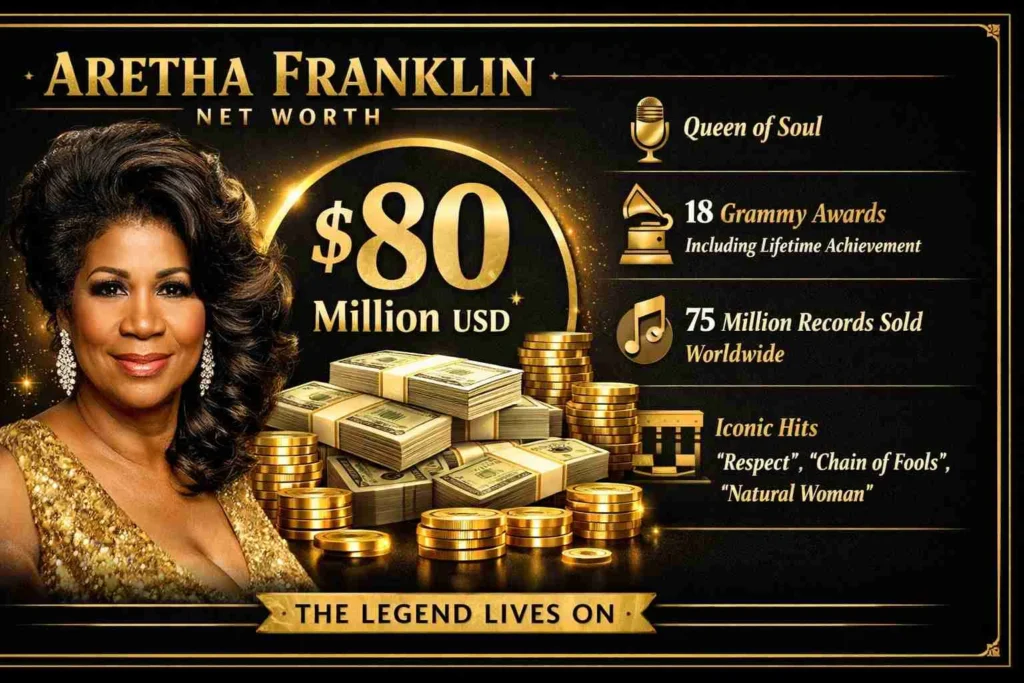
Aretha Franklin had an estimated net worth of about $80 million at the time of her death in 2018. Her wealth came from decades of successful music sales, performances, and royalties as the “Queen of Soul.” 🎤💰
Aretha Franklin, widely celebrated as the “Queen of Soul,” was an iconic American singer, songwriter, and pianist whose influence reshaped the landscape of music across multiple generations. With a career spanning over six decades, Franklin earned worldwide acclaim for her powerful vocals, chart-topping hits, and numerous Grammy Awards, including a Lifetime Achievement Award.
Beyond her musical achievements, she became a symbol of cultural and social empowerment, inspiring millions with her artistry and dedication. Her legacy not only cements her as a music legend but also underscores the significant commercial success she achieved throughout her lifetime.
When evaluating Aretha Franklin’s net worth, it’s essential to consider her multifaceted income streams, which included album sales, touring, endorsements, and royalties from her vast catalog of songs. Industry experts estimate that her total wealth reached substantial figures, reflecting both her enduring popularity and shrewd business acumen.
By examining verified sources, historical records, and financial analyses of her career, one can gain an accurate understanding of how her artistic brilliance translated into tangible financial success, providing a clear picture of her economic impact in the music industry.
Aretha Franklin Net Worth Bio Data Table
| Attribute | Details |
|---|---|
| Full Name | Aretha Louise Franklin |
| Date of Birth | March 25, 1942 |
| Date of Death | August 16, 2018 |
| Age at Death | 76 years old |
| Place of Birth | Memphis, Tennessee, U.S. |
| Nationality | American |
| Height | ~5 ft 5 in (165 cm) |
| Profession | Singer, Songwriter, Pianist, Actress |
| Net Worth at Death | ~$80 million USD |
| Main Sources of Income | – Music royalties (hits like Respect, Natural Woman, Think) – Album sales & concert tours – Endorsements and appearances – Publishing rights and intellectual property |
| Famous For | “Queen of Soul”; iconic hits, multiple Grammy Awards, cultural impact on R&B, soul, and pop music |
| Awards / Honors | 18 Grammy Awards, 1 Academy Award, Presidential Medal of Freedom, Rock and Roll Hall of Fame inductee |
| Estate / Legacy | Estate continues to earn via royalties, licensing, and streaming, estimated ~$80M+ as of 2026 |
| Personal Life | Four marriages, four children; active in civil rights movements |
| Status | Deceased; legacy continues through estate and music |
Who Is Aretha Franklin?
Aretha Franklin was an American singer, songwriter, and pianist whose voice defined soul music for multiple generations. Born in Memphis, Tennessee, she grew up in Detroit, Michigan, where her father was a prominent Baptist minister and her mother a talented pianist.
Franklin’s musical roots were planted in gospel music, singing in her father’s church from a young age. Her secular recording career began in the late 1950s, leading to a breakout in the 1960s with hits that would define popular music. She became one of the first female artists to command control over her recordings, a Powerful move that helped shape artist rights for decades.
Aside from her powerhouse vocals, Franklin was also known for her commanding stage presence, cultural influence, and contributions to civil rights. She performed for presidents, won countless awards, and became a symbol of artistic excellence and personal resilience.
Net Worth Overview
As of 2026, Aretha Franklin net worth is estimated to be $80 million USD (after her passing). This figure reflects her career earnings from record sales, touring, royalties, licensing, and investments. It also incorporates posthumous revenue from catalogs, streaming, brand partnerships, and estate income.
Disclaimer: Net worth figures are estimates based on publicly available data and may vary.
Net Worth Growth Timeline
Before Fame
- 1956–1960: Aretha began singing gospel and later recorded her first album at age 14.
- Her earliest earnings were modest, derived from local performances, small recording contracts, and church events.
Breakthrough Phase (1967–1975)
- Franklin signed with Atlantic Records and released hits like “Respect,” “Chain of Fools,” and “(You Make Me Feel Like) A Natural Woman.”
- This period marked her first major income surge through record sales, royalties, and touring.
- Annual earnings during peak years likely ranged from $500K to $2M+ due to high radio play and album sales.
Peak / Recent Years (1980s–2018)
- Franklin diversified into soundtrack work, television specials, and international tours.
- Earnings became more stable but less volatile compared to her breakout years.
- Post‑2000, revenue streams shifted strongly toward royalties, catalog licensing, and digital streaming.
Main Sources of Income
Core Profession Income
Album Sales:
Aretha sold many millions of records worldwide. Catalog sales generated consistent royalties long after initial release.
Live Touring:
She toured extensively domestically and internationally contributing significantly to her income, especially during peak years.
Performance Fees:
Special event appearances (e.g., presidential inaugurations, award shows) brought substantial performance payouts.
Brand Endorsements & Sponsorships
Though not as endorsement‑heavy as pop stars of later generations, Franklin’s brand value earned deals with music brands, luxury products, and cultural partnerships.
Merchandise & Licensing
- Licensing of her songs in films, TV shows, commercials, and documentaries generates meaningful ongoing revenue.
- Merchandise tied to her brand, especially posthumous releases, adds to estate income.
Business Strategy Behind the Wealth
Aretha Franklin’s financial success was rooted not only in talent but in strategic career decisions:
- Ownership of Rights:
Early insistence on control over her music helped secure sustained royalty revenue. - Diversification:
She did not rely solely on touring; licensing, publishing, and brand partnerships played key roles. - Catalog Management:
Her estate continues to capitalize on her expansive catalog through curated releases and licensing. - Legacy Branding:
The “Queen of Soul” brand remains a marketable cultural asset leading to documentaries and tribute projects with financial upside.
Awards & Achievements and Financial Impact
Aretha Franklin’s awards are not just cultural accolades they directly influenced her earning power:
- 18 Grammy Awards
- Lifetime Achievement Awards
- Rock & Roll Hall of Fame Inductee
- Kennedy Center Honors
Such high‑profile recognition expands demand for performances, increases catalog valuation, and elevates legacy licensing deals.
Assets & Lifestyle
Real Estate
Franklin owned real estate in high‑value markets, including homes in Detroit and elsewhere. Estate properties often appreciate and contribute to legacy net worth.
Cars & Luxury
Her lifestyle reflected success from luxury automobiles to investments in premium experiences although not publicly detailed to the extent of modern celebrity net worth reporting.
Fashion / Investments
Franklin’s influence extended into fashion, collectibles, and artwork, some of which remain assets within her estate.
Net Worth Comparison (Peers / Industry)
| Peer Artist | Estimated Net Worth |
| Gladys Knight | $30–$50 million |
| Diana Ross | $200–$250 million |
| Tina Turner (Estate) | $200M+ |
| Stevie Wonder | $110–$160 million |
Aretha Franklin stands among top‑tier soul artists, with net worth reflecting enduring global influence and catalog strength.
Controversies, Challenges & Financial Risks
Despite massive success, Franklin faced challenges:
- Contract Disputes: Early industry contracts limited earnings.
- Health Struggles: Reduced touring in later years affected income potential.
- Market Shifts: Transition from physical sales to streaming reduced traditional revenue.
However, smart catalog management and legacy monetization mitigated long‑term financial risk.
Philanthropy & Social Impact
Franklin’s financial success enabled significant philanthropy:
- Donations to educational causes
- Support for civil rights initiatives
- Community work in Detroit
Her social impact enhanced brand perception and trust, indirectly contributing to long‑term income through cultural relevance.
How Aretha Franklin Makes Money Outside Core Profession
Even posthumously, Franklin’s estate earns through:
- Streaming royalties
- Licensing for media
- Tribute shows and brand deals
- Estate partnerships for documentaries and specials
Her wealth extends beyond sales and tours, into cultural licensing and media rights.
Future Net Worth Projection
Looking ahead:
- Continued catalog streaming growth
- Biographical films or series
- Legacy partnerships and branded experiences
Projected estate income could sustain or grow current net worth estimates through 2030 and beyond.
Frequently Asked Questions
Q1: What was Aretha Franklin’s net worth when she died?
A1: Estimates range $80 million at the time of her death in 2018.
Q2: How did Aretha Franklin earn most of her money?
A2: Through album sales, touring, publishing royalties, and licensing.
Q3: Did Aretha Franklin own her music rights?
A3: She fought for creative control early in her career a key to long‑term earnings.
Q4: Is Aretha Franklin one of the richest female singers?
A4: Yes, she remains one of the highest‑earning female soul artists in history.
Q5: Does Aretha Franklin still earn money after death?
A5: Yes through streaming, licensing, and estate deals.
Conclusion
Aretha Franklin net worth reflects not only immense artistic achievement but smart career and legacy management. From humble beginnings in gospel to becoming the “Queen of Soul,” her earnings come from multiple income streams from record sales to royalties, touring to licensing.
Her financial legacy continues to grow, driven by enduring relevance, catalog demand, and cultural impact. While exact figures are estimates, one thing remains clear: Aretha Franklin’s influence musical and financial is unparalleled and enduring.

Chris Woakes blends his love for sports and wordplay, delivering a witty, pun-filled style that turns everyday cricket anecdotes and life observations into clever, lighthearted storytelling. His humor is sharp yet approachable, making readers laugh while appreciating his clever linguistic twists.