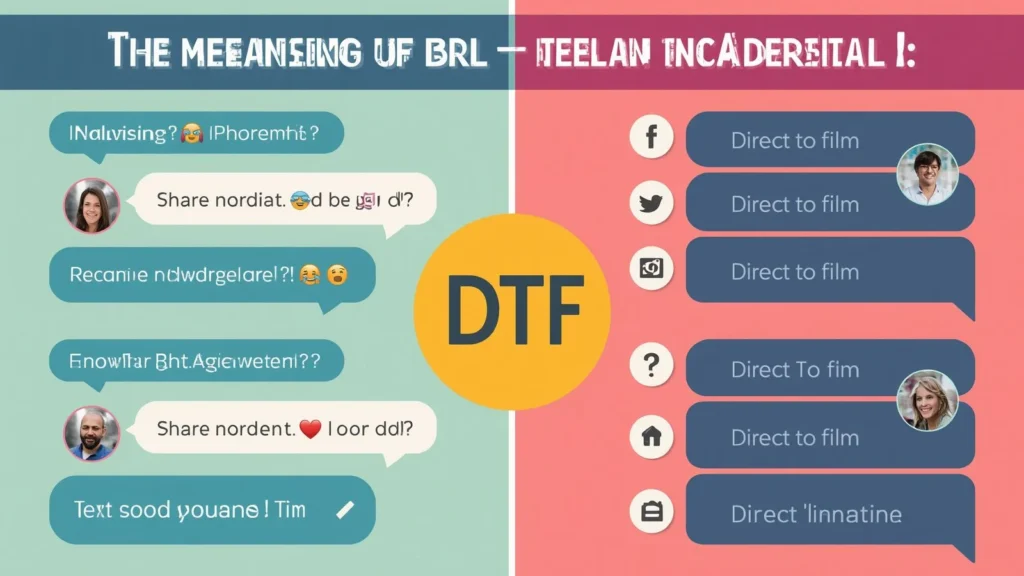

DTF stands for “Down To F*”**, a slang term primarily used in casual conversations and online messaging to indicate sexual interest or willingness.
While most commonly used in dating and hookup contexts, the abbreviation has other niche meanings in professional or technical settings.
The term DTF is a slang acronym commonly used in casual conversations and online chats. It stands for “Down To [Fun/Whatever context]” and usually indicates someone’s willingness to engage in a particular activity or hang out, often with a playful or flirtatious tone.
While its usage is widespread on social media and dating apps, the meaning can slightly vary depending on the context, so understanding the conversation’s tone is key.
What Does DTF Mean?
In modern digital communication, abbreviations and acronyms are everywhere. DTF is one of the most widely recognized, often appearing in texts, social media, dating apps, and memes. Its direct interpretation “Down To F*”** signals casual consent for sexual activity.
However, context is everything. Outside casual or dating conversations, DTF can also mean:
- Direct To Film A printing technique in the textile and garment industry.
- Down To Finish Used in professional or team-based contexts to show commitment.
Understanding the correct usage depends heavily on context, tone, and audience.
Origin of DTF
The acronym DTF gained popularity in the 2000s with the rise of texting culture and internet slang. It was further popularized by pop culture references, particularly in movies and TV shows that portray casual dating scenarios.
- Cultural Popularity: Many people first encountered DTF in urban slang, music lyrics, and comedy shows.
- Digital Age Influence: Social media platforms like Twitter, Instagram, and Snapchat accelerated its adoption.
- Memes & Viral Content: Meme culture often uses DTF humorously, sometimes exaggerating its sexual undertones for comedic effect.
Real-World Usage
1. Casual Dating & Messaging
DTF is most frequently used in dating or hookup contexts. Here are some examples:
| Context | Example | Tone |
| Texting between friends | “Are you DTF tonight?” | Casual, flirty |
| Dating apps | “Looking for someone who’s DTF 😉” | Suggestive, playful |
| Group chat joking | “He’s not DTF… yet 😏” | Humorous, teasing |
2. Professional or Technical Use
Outside the sexual context, DTF can be used professionally:
- Direct To Film (DTF printing) A method where designs are printed directly onto film for transfer onto garments.
- Down To Finish (DTF teamwork) Shows commitment or readiness to complete a task.
Tone Matters
Using DTF incorrectly can create awkward or inappropriate situations. Always consider:
- Audience (friends vs. colleagues)
- Platform (dating app vs. professional email)
- Regional sensitivity (slang meaning may vary culturally)
Examples in Different Tones
Friendly / Flirty
- “Are you DTF? 😏” casual and playful among consenting adults.
Neutral / Informative
- “DTF in printing means Direct To Film, a method used in textile production.”
Negative / Dismissive
- “I don’t appreciate being asked if I’m DTF.” signals discomfort or rejection.
Comparison With Similar Terms
There are several related abbreviations or slang terms you might encounter:
| Abbreviation | Meaning | Context / Notes |
| FWB | Friends With Benefits | More specific about ongoing casual sexual relationships. |
| NSA | No Strings Attached | Casual sexual context emphasizing no emotional commitment. |
| DTL | Down To Listen | Non-sexual, casual consent for conversation. |
| ISO | In Search Of | Often used in online communities for dating or relationships. |
Key Difference: DTF explicitly refers to sexual willingness, whereas FWB or NSA indicate relationship structure or expectations.
Alternate Meanings of DTF
While the sexual slang dominates, here are a few other contexts where DTF appears:
- Direct To Film (Printing) Used in textile, t-shirt, and apparel industries.
- Down To Finish Workplace or sports slang for dedication.
- Data Transfer Function Technical/engineering context in software or electronics.
⚠️ Tip: Always clarify context if unsure about the meaning to avoid misunderstandings.
Polite or Professional Alternatives
If you want to express consent or willingness in a polite, professional, or non-sexual manner, consider:
- “Open to meeting up”
- “Interested?”
- “Available to collaborate” (professional context)
- “Ready to participate” (team/project context)
These phrases convey interest or commitment without sexual undertones.
FAQs:
1. Is DTF only sexual?
No, while it’s widely recognized as sexual slang, DTF can have professional, technical, or non-sexual meanings depending on context.
2. Where did DTF originate?
It originated from urban slang and texting culture in the early 2000s, later popularized by movies, TV shows, and social media.
3. Can DTF be used professionally?
Yes, in contexts like Direct To Film printing or Down To Finish teamwork, DTF has non-sexual professional meanings.
4. How do you respond if someone asks if you’re DTF?
It depends on your comfort level. You can respond:
- Positively: “Yes 😏” (if consensual)
- Politely decline: “No, not interested”
- Deflect: “Not my style”
5. Is DTF appropriate on social media?
It can be, but only in adult or dating contexts. Avoid using it in professional or mixed-audience posts.
6. Are there similar acronyms to DTF?
Yes: FWB, NSA, DTL, ISO. Each has slightly different implications regarding relationships or consent.
7. Can DTF mean something in business?
Yes, like Down To Finish, which signals commitment to complete tasks or projects.
8. How do you use DTF in a sentence?
Example: “I’m DTF tonight 😉” (casual/flirty) or “This printer uses DTF technology for t-shirts” (professional/technical).
Conclusion:
In modern slang, DTF stands for “Down To [Expletive]”, which is a casual, often provocative way of expressing sexual availability or interest.
While it is commonly used in texting, social media, and dating apps, it is considered informal and can be seen as vulgar, so context and audience matter when using it.
Essentially, it signals willingness for a sexual encounter, but should always be approached with mutual consent and respect.
Practical Tips
- ✅ Clarify context if unsure about meaning.
- ✅ Use emojis or tone indicators in casual contexts to convey playfulness.
- ✅ Avoid using DTF in formal or mixed-company communication.