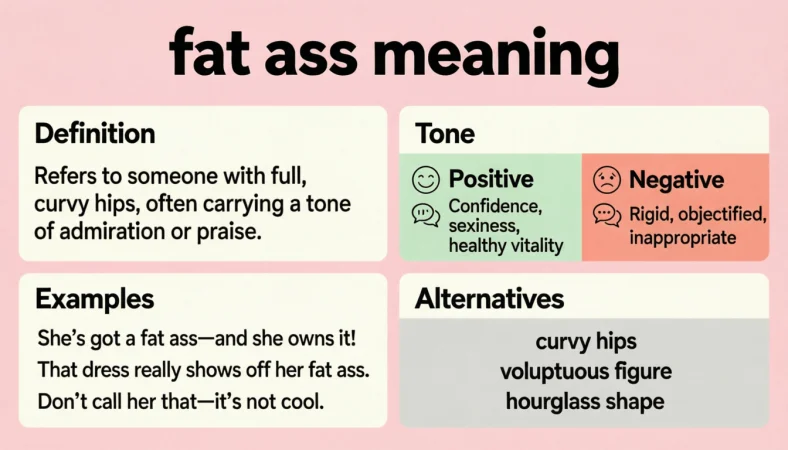

“Fat ass” is an informal slang term used to describe someone with a large or prominent buttocks. Depending on context and tone, it can be insulting, teasing, or sometimes even complimentary (especially in modern pop culture where curvier body types are appreciated).
The phrase “fat ass” is commonly used in everyday conversations, especially on social media, in movies, and in casual slang. While it may sound simple, its meaning can vary widely depending on tone, context, and intent.
For some, it’s used humorously among friends, while for others, it can come across as offensive or disrespectful. Understanding how and when this term is used is important to avoid misunderstandings or unintended harm.
In modern communication, words carry different meanings based on culture, setting, and relationship between speakers. “Fat ass” is a strong expression that can describe someone’s physical appearance, but it is often considered informal and potentially rude.
Being aware of its implications helps you use language more thoughtfully, whether you’re chatting online, writing content, or engaging in real-life conversations.
What Does “Fat Ass” Mean?
At its core, “fat ass” refers to:
- A person with large buttocks
- OR someone perceived as overweight or lazy (in a negative sense)
Key Insight:
👉 The meaning shifts based on intent + context + relationship between speakers
Origin and Evolution of the Phrase
The term “fat ass” comes from simple English word combination:
- “Fat” → describing size or body weight
- “Ass” → slang for buttocks
Early Usage
- Traditionally used as an insult, especially in schoolyard or informal settings
- Often aimed at body shaming or criticizing someone’s appearance
Modern Evolution
Over time, especially with the rise of:
- Hip-hop culture
- Social media (Instagram, TikTok)
- Body positivity movements
…it has taken on new meanings, including:
- Admiration for curvy figures
- Playful teasing among friends
- Self-descriptive humor
Tone Matters: Positive vs Negative Meaning
The phrase can feel completely different depending on delivery.
1. Negative / Insulting Tone ❌
Used to criticize or shame someone.
Example:
- “Stop being a lazy fat ass and do something.”
👉 Clearly offensive and disrespectful.
2. Playful / Teasing Tone 😄
Used jokingly between friends.
Example:
- “Bro, you ate all the pizza? You fat ass 😂”
👉 Still riskydepends on friendship level.
3. Compliment / Admiring Tone 🔥
In modern slang, especially online or in music.
Example:
- “She’s got a fat ass 🔥”
👉 Often used as a physical compliment (though still informal and potentially objectifying).
Real-Life Usage Examples (With Context)
Here’s how meaning changes depending on situation:
| Context | Sentence | Tone | Interpretation |
| Argument | “You’re such a fat ass.” | Negative | Insult |
| Friends joking | “You fat ass, save some food!” | Playful | Teasing |
| Social media | “That outfit shows off your fat ass 🔥” | Positive | Compliment |
| Self-joke | “I’ve been a fat ass this weekend 😅” | Neutral | Self-deprecating humor |
Popularity in Pop Culture & Social Media
The phrase has gained visibility through:
1. Music & Entertainment
- Common in rap and hip-hop lyrics
- Often used to describe attractive body features
2. Social Media Trends
- Instagram captions
- TikTok comments
- Meme culture
3. Body Positivity Movement
- Shift from shame → celebration of curves
- Reclaimed language in some communities
Comparison With Similar Slang Terms
Understanding related terms helps avoid confusion.
| Term | Meaning | Tone | Difference |
| Thick / Thicc | Curvy body | Positive | More respectful and trendy |
| Curvy | Full body shape | Neutral/Positive | Polite and formal |
| Booty | Buttocks | Neutral/Playful | Less offensive |
| Big booty | Large butt | Positive | More clearly complimentary |
| Fat ass | Large butt / insult | Mixed | Can be offensive |
Alternate Meanings (Less Common)
While primarily about physical appearance, it can also mean:
1. Lazy Person
- “He’s just sitting there like a fat ass.”
👉 Focus shifts from body → behavior
2. Food Lover (Slang Humor)
- “I’m a fat ass when it comes to desserts.”
👉 Self-deprecating humor
When You Should (and Should NOT) Use It
✅ Acceptable Situations
- Close friends who joke like this
- Self-referential humor
- Casual online slang (with awareness)
❌ Avoid Using It
- In professional settings
- With strangers
- In sensitive conversations about body image
- When unsure of how the other person feels
Polite & Professional Alternatives
If you want to avoid offending someone, use these instead:
For Physical Description
- Curvy
- Well-shaped
- Athletic build
- Full-figured
For Humor (Safe Options)
- Food lover
- Big appetite
- Snack king/queen 😄
For Compliments
- “You look amazing in that outfit!”
- “That outfit suits your figure perfectly.”
Usage Tips: Stay Smart With Slang
- Know your audience – Not everyone finds it funny
- Watch tone carefully – Text can be misinterpreted
- Avoid in formal writing – Not appropriate for professional content
- Respect boundaries – If someone dislikes it, don’t use it
Frequently Asked Questions
1. Is “fat ass” always offensive?
No. It depends on tone and context, but it is often considered offensive, especially in formal or unfamiliar settings.
2. Can “fat ass” be a compliment?
Yes, in some modern contexts (especially online or in music), it can be used as a compliment for curvy features.
3. Is it appropriate to use at work?
No. It is not a professional language and should be avoided in workplaces.
4. Why do people use it jokingly?
Among friends, it can be used for playful teasing, but only if everyone is comfortable.
5. What’s the difference between “fat ass” and “thicc”?
- Thicc → Positive, trendy, body-positive
- Fat ass → Mixed tone, can be offensive
6. Is it body shaming?
It can be, especially when used negatively or without consent.
7. Can I use it in social media captions?
Yes, but be mindful it may offend some audiences.
8. What’s a safer compliment instead?
Use phrases like:
- “You look great!”
- “That outfit fits you perfectly!”
Conclusion:
In conclusion, the term “fat ass” can carry different meanings depending on the context, tone, and relationship between the people using it. While it is often used as an insult to describe someone who is overweight or lazy, it can also be used playfully or even as a compliment in certain informal or cultural settings.
Because of its potential to offend, it’s important to be mindful when using this phrase what might sound like a joke to one person could feel disrespectful to another. Choosing respectful and clear language is always the safest way to communicate effectively.