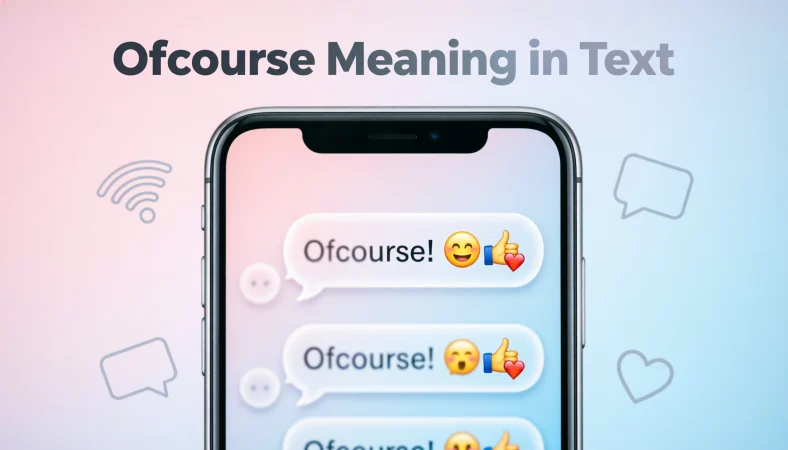

Quick Answer: “Ofcourse” in text means “definitely,” “yes,” or “naturally.” It is an informal variation of the correct spelling “of course”, commonly used in texting, chats, and social media to show agreement, confirmation, or willingness.
If you’ve ever received a quick reply like “ofcourse!” in a chat, you might have wondered whether it’s just a casual typo or something more intentional. In today’s fast-paced digital conversations, shortened or informal expressions are everywhere and “ofcourse” is one of those widely used variations.
While technically not the grammatically correct form, “ofcourse” has become popular in texting culture as a relaxed, friendly way to say “yes,” “sure,” or “absolutely.” Understanding how and when to use it can help you communicate more naturally without sounding too formal or accidentally coming off as rude.
What Does “Ofcourse” Mean in Text?
At its core, “ofcourse” is simply an informal spelling of “of course.” It carries the same meaning but is used more casually in digital communication.
Core Meanings:
- Agreement: “Yes” or “definitely”
- Willingness: “Sure, I’ll do it”
- Expectation: “Obviously” or “naturally”
Example:
- “Can you help me with this?”
→ “Ofcourse!”
Origin and Popularity
The phrase “of course” has been part of the English language for centuries, originally used to express something that follows naturally or logically.
How “Ofcourse” Became Popular:
- Emerged from fast typing habits
- Spread through SMS, WhatsApp, and social media
- Became common in informal chats and online communities
Why People Use It:
- Saves time while typing
- Feels more relaxed and conversational
- Matches modern texting style
Even though “ofcourse” isn’t officially recognized in formal writing, it’s widely accepted in casual communication.
How “Ofcourse” Is Used in Texting
The meaning of “ofcourse” can slightly change depending on tone, punctuation, and context.
1. Friendly and Positive Tone 😊
Used to show enthusiasm or willingness.
- “Can you come to my party?”
→ “Ofcourse! I’ll be there 🎉”
2. Neutral Tone
Simple agreement without strong emotion.
- “Did you finish the assignment?”
→ “Ofcourse.”
3. Slightly Dismissive or Obvious Tone 😏
Can sound like “well, obviously.”
- “You knew about this?”
→ “Ofcourse I did.”
⚠️ Tip: Tone depends heavily on punctuation and context. Adding emojis or exclamation marks can make it friendlier.
Examples of “Ofcourse” in Real Conversations
Example Table: Tone-Based Usage
| Context | Example Sentence | Tone Type | Meaning |
| Helping a friend | “Ofcourse, I’ll help you!” | Friendly 😊 | Happy to help |
| Answering a question | “Ofcourse.” | Neutral | Yes / confirmation |
| Showing confidence | “Ofcourse I can do it.” | Assertive | Strong belief |
| Slight irritation | “Ofcourse I know that.” | Dismissive 😒 | It’s obvious |
| Invitation reply | “Ofcourse! Sounds fun!” | Excited 🎉 | Positive acceptance |
Is “Ofcourse” Correct or Incorrect?
Technically Incorrect ❌
- The correct spelling is “of course” (two words)
Acceptable in Informal Contexts ✅
- Text messages
- Social media comments
- Casual chats
Not Recommended For:
- Academic writing
- Professional emails
- Business communication
“Ofcourse” vs “Of Course”
| Feature | Ofcourse | Of Course |
| Spelling | Informal / incorrect | Correct |
| Usage | Casual texting | Formal & informal |
| Tone | Relaxed, quick | Neutral to professional |
| Acceptance | Not standard English | Standard English |
👉 Best Practice:
Use “of course” in formal writing, and “ofcourse” only in casual conversations.
Comparison With Similar Terms
Understanding similar phrases helps you choose the right tone in conversations.
1. Ofcourse vs Sure
- Ofcourse: More confident and natural
- Sure: Polite but slightly less enthusiastic
2. Ofcourse vs Definitely
- Ofcourse: Casual and conversational
- Definitely: Stronger emphasis and certainty
3. Ofcourse vs Obviously
- Ofcourse: Can be polite or neutral
- Obviously: Can sound rude if misused
Quick Comparison Table
| Phrase | Tone | Best Use Case |
| Ofcourse | Casual | Friendly chats |
| Sure | Polite | Everyday responses |
| Definitely | Strong | Clear agreement |
| Obviously | Risky tone | Only when context is clear |
Alternate Meanings of “Ofcourse”
While “ofcourse” generally means agreement or confirmation, its implied meaning can change based on context:
- Encouragement: “Ofcourse you can do it!”
- Reassurance: “Ofcourse everything will be fine.”
- Sarcasm: “Ofcourse… what else did you expect?”
Polite & Professional Alternatives
If you’re communicating in a professional or respectful setting, consider these alternatives:
Better Options:
- “Of course” (correct form)
- “Certainly”
- “Absolutely”
- “Sure, I’d be happy to”
- “Yes, definitely”
Example:
- Casual: “Ofcourse I’ll send it.”
- Professional: “Of course, I’ll send it shortly.”
Usage Tips: When to Use “Ofcourse”
✅ Use It When:
- Chatting with friends
- Responding quickly
- Keeping tone relaxed
❌ Avoid It When:
- Writing emails to clients
- Preparing formal documents
- Communicating in professional settings
Pro Tip:
Add emojis or punctuation to soften tone:
- “Ofcourse 😊”
- “Ofcourse!!”
- “Ofcourse 👍”
Common Mistakes to Avoid
- ❌ Using “ofcourse” in formal writing
- ❌ Sounding rude unintentionally (especially without emojis)
- ❌ Overusing it in every response
✔ ️ Balance is key, mix it with other expressions.
FAQ:
1. Is “ofcourse” one word or two?
The correct form is “of course” (two words). “Ofcourse” is informal.
2. Is “ofcourse” slang?
Not exactly slang, but it’s an informal texting variation.
3. Can I use “ofcourse” in emails?
No, it’s better to use “of course” in emails.
4. Does “ofcourse” sound rude?
It can sound rude if used without context or in a dismissive tone.
5. Why do people write “ofcourse” instead of “of course”?
Mainly for speed and convenience in texting.
6. Is “ofcourse” grammatically correct?
No, it’s not standard grammar, but widely accepted in casual use.
7. What emojis go well with “ofcourse”?
😊 👍 🎉 😄 these make it sound friendly.
8. What is a better formal alternative?
Use “certainly,” “absolutely,” or “of course.”
Conclusion
The phrase “ofcourse” in text is a simple yet powerful way to express agreement, willingness, or confidence in casual conversations. While it’s not grammatically correct, its widespread use in texting and social media makes it a familiar part of modern communication.
The key is knowing when and where to use it. In friendly chats, it helps keep the tone light and natural. But in professional or formal settings, switching to “of course” or other polished alternatives ensures clarity and respect.
By understanding its tone, variations, and proper usage, you can communicate more effectively whether you’re texting a friend or replying in a professional setting.