
Definition:
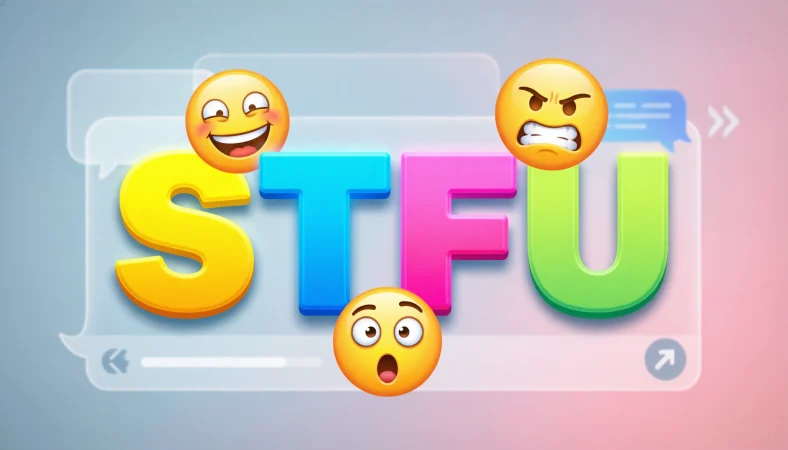
STFU is an internet slang acronym that stands for “Shut The F* Up.”** It is commonly used online or in text messaging to tell someone to stop talking, often in a blunt or humorous way. The tone can range from playful to aggressive depending on context.
In today’s fast-moving digital world, slang terms spread quickly across social media, texting, and online conversations. One such commonly used abbreviation is “STFU,” which often appears in chats, comments, and memes. While it may look casual or even humorous in certain contexts, its meaning carries a strong tone that users should understand before using it.
“STFU” stands for “Shut The F*** Up.” It is typically used to tell someone to stop talking, often in a direct, blunt, or even aggressive way. Depending on the situation, it can come across as joking among friends or highly offensive in serious conversations. Because of its intensity, understanding the tone, audience, and context is essential before using this term in communication.
Origin of STFU
The acronym STFU emerged in online forums, chat rooms, and instant messaging platforms in the late 1990s and early 2000s, a time when shorthand communication was becoming popular due to typing speed and character limits.
- Early Usage: Online gaming communities and forums like IRC (Internet Relay Chat) popularized the term.
- Spread Through Social Media: Platforms like Twitter, Facebook, and Reddit accelerated its usage.
- Cultural Adoption: STFU has transitioned from niche online slang to a more widely recognized internet phrase among millennials and Gen Z.
Fun Fact:
While STFU is direct and often aggressive, in casual contexts among friends, it can be used humorously, similar to saying “stop teasing me!” 😅
How STFU is Used
STFU is typically employed in digital conversations, especially where informal language is common:
- Text Messaging: Quick response to unwanted commentary.
- Social Media: Replies, comments, or memes where brevity and impact are needed.
- Gaming Chats: Often used to assert dominance or signal frustration.
Tone and Context
The tone of STFU can drastically change its meaning:
| Tone | Context Example | Interpretation |
| Friendly | “STFU, you’re hilarious 😂” | Teasing or joking |
| Neutral | “STFU, I need to focus on my work” | Direct request to be quiet without insult |
| Negative | “STFU! Nobody cares what you think” | Dismissive, rude, or confrontational |
Pro Tip: Consider your audience before using STFU what is playful with friends may be offensive in professional or casual acquaintances.
Examples of STFU in Real Conversations
Here’s a practical breakdown with context:
- Friendly/Funny:
- Friend: “I can eat 10 pizzas in one sitting!”
- You: “STFU 😆 No way!”
- Neutral/Direct:
- Coworker repeatedly sending messages during focus time:
- You: “STFU for a moment, I need to finish this task.”
- Negative/Dismissive:
- Argument in a group chat:
- You: “STFU! I’m done with this discussion.”
Emoji Note: Emojis often soften the harshness of STFU, making it playful rather than aggressive.
STFU vs. Similar Terms
STFU is part of a broader set of internet slang acronyms meant to tell someone to stop talking or comment humorously. Here’s a comparison:
| Acronym | Meaning | Tone | Usage Context |
| STFU | Shut The F*** Up | Harsh, playful | Texting, online chats, memes |
| STFA | Shut The Freaking/Flip Up | Polite version | Family-friendly or professional chat |
| GTFO | Get The F*** Out | Strong, rude | Dismiss someone aggressively |
| HUSH | Be quiet / stop talking | Gentle | Neutral or professional |
| SILENCE | Stop speaking | Formal | Workplace or official communication |
Key Insight: STFU is more casual and versatile compared to GTFO or HUSH, but always carries the potential for offense if misused.
Alternate Meanings of STFU
While the most common meaning is “Shut The F* Up,”** some less popular or humorous alternatives exist:
- Stay The F* Up** – rare, usually in motivational memes.
- Smell The Funky Unicorn – playful, internet joke version.
- Stop Talking For a While – a softer, literal interpretation.
Note: These alternate meanings are niche and mostly used humorously in memes or online subcultures.
Polite or Professional Alternatives
Using STFU in professional or formal settings is inappropriate. Consider these alternatives:
| Polite Alternative | Context Example |
| Please be quiet | “Can we pause this conversation for a moment, please be quiet?” |
| Could you lower your voice? | “I’m trying to focus, could you lower your voice?” |
| Let’s take a break | “I think we should take a break from this discussion.” |
| Silence, please | “Silence, please, while we complete the presentation.” |
These phrases maintain your intent without offending the recipient.
Tips for Using STFU Effectively
- Know Your Audience: Friends may take it as humor; colleagues may find it offensive.
- Use Emojis or Punctuation: Adding 😆, 😂, or ! can soften or emphasize tone.
- Avoid Overuse: Constantly telling someone STFU can be perceived as hostile.
- Combine With Context: Pair it with a reason or joke for clarity.
Example Table: STFU in Different Contexts
| Situation | Message Example | Tone | Interpretation |
| Group Chat (funny) | “STFU 😂 you’re too dramatic!” | Friendly | Playful teasing |
| Gaming Chat (frustration) | “STFU, stop camping there!” | Neutral | Direct and urgent |
| Social Media Argument | “STFU! Nobody asked you” | Negative | Aggressive, dismissive |
| Classroom or Zoom Meeting | “STFU for a second, focus please” | Neutral | Polite, direct instruction |
FAQs:
1. Is STFU offensive?
Yes, it can be offensive depending on context and tone, particularly in professional or formal settings.
2. Can STFU be used humorously?
Absolutely! Among friends, it often expresses playful disbelief or teasing.
3. Is STFU appropriate in work communication?
No, professional alternatives like “please be quiet” or “let’s pause the conversation” are recommended.
4. Where did STFU originate?
STFU emerged from early internet forums and chat rooms in the late 1990s.
5. What’s the difference between STFU and GTFO?
STFU tells someone to stop talking; GTFO tells someone to leave or exit. GTFO is stronger and more confrontational.
6. Are there milder versions of STFU?
Yes, abbreviations like STFA (Shut The Freaking/Flip Up) or HUSH are softer alternatives.
7. Can STFU be used in text messaging?
Yes, it is widely used in texts, DMs, and social media comments for quick, blunt communication.
8. What emoji pairs well with STFU?
😂, 😆, 😳, or 😤 can soften or emphasize the tone depending on intent.
Conclusion
In today’s fast-paced digital conversations, “STFU” is a widely recognized slang term that stands for “Shut The F** Up.”* While it can sometimes be used jokingly among friends, it often carries a harsh or aggressive tone. Because of this, it’s important to understand the context before using or responding to it.
Overall, STFU is best used cautiously. In casual or friendly settings, it might come across as playful, but in formal or unfamiliar situations, it can easily seem rude or offensive. Choosing respectful language is always the safer option, especially when communicating online where tone can be easily misunderstood.
Practical Tip: Before sending STFU, ask yourself: “Will the recipient find this funny, neutral, or offensive?” Context is everything.