
Definition:
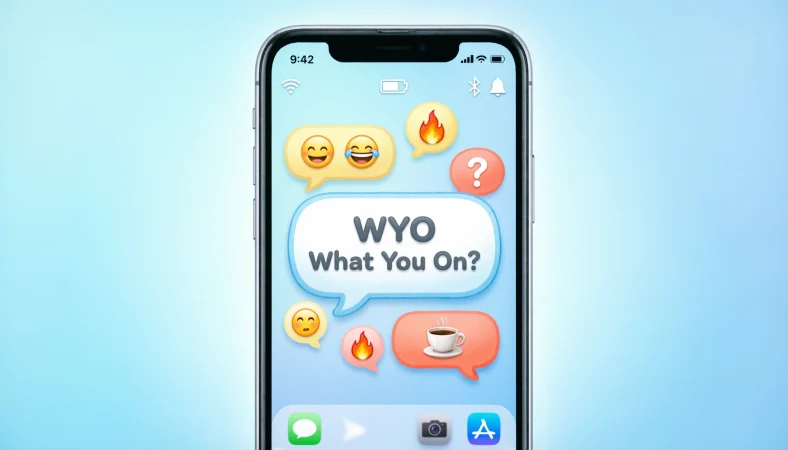
WYO is an acronym commonly used in texting and online conversations that stands for “What You On?”. It’s a casual, often friendly way of asking someone what they are currently doing, their plans, or how they are spending their time.
WYO is a popular internet slang term that stands for “What You On?” It’s commonly used in text messages, social media, and casual chats to ask someone what they’re doing, what their plans are, or what they’re interested in at the moment. Depending on the context, it can also carry a slightly different tone like checking in, starting a conversation, or even inviting someone to hang out.
In everyday digital communication, WYO reflects how language continues to evolve in fast, informal environments. It’s especially common among younger audiences and in platforms like Snapchat or Instagram, where short, quick phrases are preferred.
Understanding terms like WYO helps you stay updated with modern communication trends and ensures you can engage naturally and confidently in online conversations.
Origin of WYO
The acronym WYO originated from informal digital communication, particularly text messaging and early social media platforms. Its usage gained popularity in the 2000s with the rise of chat-based texting, where brevity was key.
- Texting culture: SMS character limits encouraged short forms.
- Social media & apps: Platforms like Twitter, Snapchat, and WhatsApp amplified these abbreviations.
- Regional slang influence: WYO is often used in urban vernacular and casual conversations among younger audiences.
Essentially, WYO is a shorthand way of asking someone about their current activity or intentions without typing a full question like, “What are you doing right now?”
Popularity and Real-World Usage
WYO’s popularity is tied to its informal and casual tone. It’s most common among:
- Teens and young adults texting friends
- Social media direct messages
- Online gaming communities
The usage often implies friendliness or casual curiosity, and it can vary slightly depending on context:
- Friendly: Checking in on a friend, e.g., “Hey! WYO this weekend?”
- Neutral: General conversation starter, e.g., “WYO right now?”
- Flirty or playful: Can be used as an opener in dating apps.
Despite its popularity, it’s important to note that WYO is informal and usually not suitable in professional or academic communications.
Examples of WYO in Context
Here’s a labeled table showing WYO in different tones and settings:
| Tone/Setting | Example Text Using WYO | Explanation |
| Friendly | “Hey Sarah! WYO tonight? 😎” | Casual check-in for social plans |
| Neutral | “WYO at work?” | Simple inquiry about current activity |
| Flirty/Playful | “WYO? 😉” | Lighthearted, possibly flirting |
| Gaming/Online Chat | “WYO on Fortnite? Let’s squad up!” | Asking about current game activity |
| Negative/Dismissive | “WYO… really? You should be working.” | Slightly judgmental tone |
Comparison with Related Terms
Several abbreviations are often confused with WYO or serve similar purposes:
| Abbreviation | Meaning | Difference from WYO |
| WYD | “What Are You Doing?” | Almost identical, more common than WYO |
| WYA | “Where Are You At?” | Asks location instead of current activity |
| BRB | “Be Right Back” | Indicates temporary absence, not a question |
| SMH | “Shaking My Head” | Expresses disbelief or disapproval, not inquiry |
Tip: If you want to sound more contemporary, WYD is often interchangeable with WYO.
Alternate Meanings of WYO
While “What You On?” is the most common interpretation, WYO can have other meanings depending on context:
- Wyoming (US State Abbreviation): Used in addresses or geographic references.
- Work Your Options: Sometimes used in finance or business discussions.
- Wildcard: In gaming or tech forums, abbreviations may have unique, context-specific meanings.
It’s important to use context clues to determine the correct meaning when you see WYO.
Polite or Professional Alternatives
If you want to convey the same question in a more professional or polite manner, consider:
- “What are you currently working on?”
- “What are your plans for today?”
- “May I ask what you’re up to?”
These options maintain clarity and friendliness without slang, making them suitable for emails or professional messaging platforms like Slack or Microsoft Teams.
FAQs:
1. What does WYO stand for in texting?
It stands for “What You On?”, a casual way to ask someone what they’re doing.
2. Is WYO the same as WYD?
Yes, both are similar. WYD is slightly more common and widely recognized, but both mean asking about current activity.
3. Can WYO be used professionally?
Not recommended. WYO is informal slang, better suited for friends or casual chats.
4. How do I respond to WYO?
Responses vary based on context:
- Friendly: “Just chilling, wbu?”
- Neutral: “Working on a project, you?”
- Flirty: “Thinking about you 😏”
5. Where did WYO originate?
It emerged from SMS and online chat culture in the early 2000s and became popular on social media platforms.
6. Are there negative connotations of WYO?
It can be dismissive if tone or context implies judgment, e.g., “WYO… really?”
7. Is WYO popular worldwide?
Mostly in English-speaking countries, especially the US, UK, Canada, and Australia.
8. Can WYO have other meanings?
Yes, such as Wyoming or Work Your Options, depending on the context.
Practical Tips for Using WYO
- Use sparingly in professional contexts.
- Add emojis for friendly or playful tone.
- Pair with context to avoid confusion (e.g., WYO at home, WYO today?).
- Read the room: Not everyone is familiar with texting acronyms, especially older audiences.
Conclusion
WYO is a versatile, casual acronym meaning “What You On?”, widely used in texting, social media, and gaming contexts. Understanding its tone and context is crucial for proper usage. Whether friendly, neutral, or playful, WYO allows you to check in on someone’s current activity quickly and casually.
For professional or formal communication, opt for alternatives like “What are you working on?” to maintain clarity. By keeping the tone and audience in mind, you can make WYO a useful tool in your modern digital conversations.